


Yelp: Food, Delivery & Reviews
Yelp, Inc
I installed Yelp: Food, Delivery & Reviews expecting a quick way to find somewhere to eat, but its usefulness became clearer after I used it for more than one-off searches. The app from Yelp, Inc. combines restaurant discovery with reservations, food delivery, customer reviews, and searches for nearby services. That mix makes it more practical than a simple restaurant directory, although it also means the experience can feel busy when I only want one answer.
At its best, Yelp helps me move from “Where can I go?” to a reasonably informed decision. I can compare places, inspect photos, read recent comments, check whether a restaurant fits a particular occasion, and sometimes continue into booking or ordering. It is free, rated an average of 4.6 from roughly 639,000 ratings, and has passed 50 million installs. Those figures suggest a large, active audience, but popularity alone does not make every listing equally useful. My lasting opinion depends more on how well the app helps me avoid a bad choice without turning dinner planning into research.
What makes the first week appealing
The strongest early impression is breadth. Instead of keeping separate apps for restaurant searches, local recommendations, reservations, and some delivery needs, I can begin in one place. The search is especially useful when I am not looking for a specific business. I can start with a broad idea such as a casual lunch, a late meal, coffee, or a service nearby, then narrow the results by location and the details that matter to me.
I found the review pages more helpful when I treated them as evidence rather than verdicts. A high score is a useful starting signal, but the written comments often reveal the practical details I actually need: whether a room is noisy, whether portions suit a group, whether a place works for a quick visit, or whether service problems appear repeatedly. Photos can also answer questions that a menu cannot, such as the atmosphere, seating layout, and approximate presentation of dishes.
That is one of the app’s less obvious strengths: it supports occasion-based decisions, not just cuisine searches. I can look for a place for a relaxed meal, a meeting, a family visit, or a last-minute stop and interpret the listing through that purpose. The same restaurant may be excellent for one situation and inconvenient for another. Yelp gives me enough context to make that distinction instead of relying on a single star number.
Latest News

Uber Eats Under Pressure: What Happens When Delivery Goes Wrong

How QR & Barcode Scanner Adapts to Android and iOS Innovations

Why Waze Navigation & Live Traffic Is Your Essential Travel Companion

CapCut Mastery: Unleash Hidden Features for Pro-Level Editing

How OS Updates Enhance Roblox Adventures

Teacher Simulator: Exam Time Turns Quick Classroom Judgments into a Repetitive Loop
Reservations and delivery add a useful next step. When those options are available for a listing, I do not have to leave the discovery process immediately. This is convenient when I have already compared several places and want to act on the choice. Still, I would not assume that every restaurant offers every action. The app is better understood as a hub that connects discovery with available services, not as a guarantee that each business supports booking or delivery through the same path.
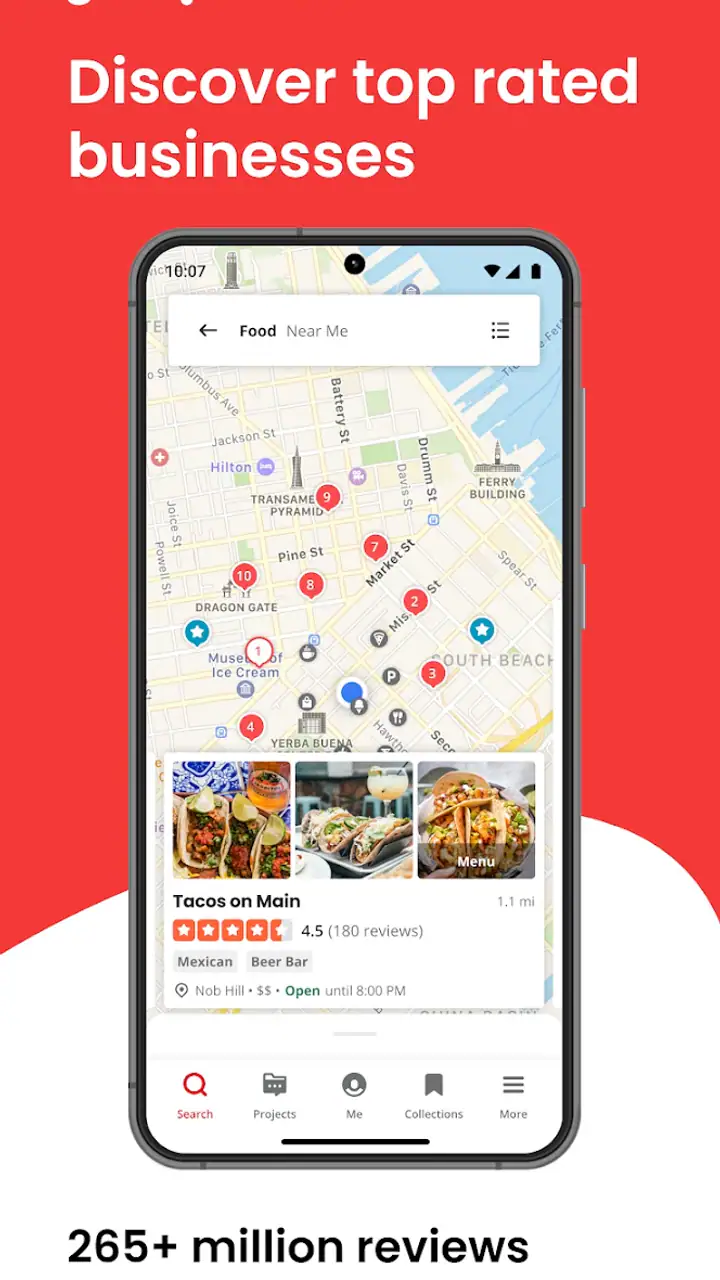
During the first week, I also noticed how valuable the map view can be for real decisions. A restaurant that looks appealing in a list may be awkwardly located for the rest of my plans, while a slightly less exciting result may be much easier to reach. Checking the map before reading too deeply saves time. I use the list for comparison and the map for reality: distance, neighborhood, and whether the result is actually convenient rather than merely well reviewed.
Another practical habit is to read a mixture of recent and older reviews. Older comments can explain a restaurant’s general character, but recent ones are more relevant when I am judging current service or consistency. I do not treat one dramatic complaint as conclusive. Instead, I look for patterns across several comments and compare those patterns with photos and the business details. This makes Yelp more reliable as a research tool than as a simple popularity chart.
Gallery
How I use it for an ordinary evening
Imagine I am meeting a friend in an unfamiliar part of town after work. I search for restaurants nearby, scan the map, and remove places that are inconveniently located. I then compare a few listings by looking at recent written feedback rather than only their ratings. If one appears suitable, I inspect the photos to judge whether the atmosphere matches a conversation over dinner. Finally, I check whether a reservation or delivery option is available and use that information to decide whether the plan is realistic.
The important part is the order. I do not begin by reading every review. I first define the practical constraint, then use Yelp to reduce the choices, and only afterward investigate the finalists. That workflow keeps the app from becoming a time sink. It also exposes a trade-off: the more specific my needs, the more useful the app becomes, but the more effort I may spend comparing results.
Why it can earn a place month after month
Novelty fades quickly in local discovery apps. Once I have tried a few restaurants, I need a reason to return. Yelp’s recurring value comes from changing circumstances: a new neighborhood, a different budget, a special occasion, a service search, or the need to check whether a familiar place still fits the moment. It is not an app I would necessarily open every day, but it can remain useful because local decisions keep changing.
The broader services category helps here. I may open Yelp for food and later use it to investigate another nearby service. That makes the app more durable than a tool focused only on restaurant menus. The benefit is not that it replaces every specialist app; rather, it gives me a familiar starting point when I am not sure which type of local business I need.
For regular restaurant planning, I find the review archive most valuable when I use it to build personal judgment. Over time, I learn which comments match my preferences. A complaint about a lively atmosphere may be a warning for someone seeking quiet, but it could be a positive sign for someone wanting energy. A comment about slow service matters more when I have a tight schedule than when I am planning a long meal. Yelp cannot make those preferences for me, but it gives me material to apply them.
There is also a useful distinction between discovery and confirmation. I may discover a restaurant through search, then use the listing later to confirm its current fit before visiting. That second use is where the app earns recurring space: I can revisit the same business, check current impressions, inspect practical details again, and decide whether the original choice still makes sense. The app becomes a lightweight local reference rather than a one-time recommendation machine.
For delivery, I see the value mainly in convenience and comparison. If I am already browsing a restaurant and delivery is offered, continuing from that listing can reduce the friction of switching between apps. However, I would still pay attention to the final order details and availability before committing. Discovery information and ordering information serve different purposes, and I do not confuse an attractive listing with proof that delivery is the best option for that particular meal.
Reservations work in a similar way. The feature is useful when I want to turn research into a plan, especially for a popular time or a group meal. But I consider the reservation step a confirmation stage, not the entire planning process. I still check the location, read relevant comments, and make sure the restaurant suits the occasion. A convenient booking flow cannot compensate for choosing the wrong kind of place.
Small workflows that improve the experience
My first tip is to search with a purpose instead of typing only a cuisine. Adding the occasion or practical need produces a more useful starting point. “Quiet dinner,” “quick lunch,” or “late coffee” communicates more about my decision than a broad category alone. I then verify the result manually because search language can be interpreted differently by different businesses.
My second tip is to use photos as a cross-check, not decoration. I compare customer images with the written comments and look for consistency in seating, portion style, and atmosphere. If the photos suggest one experience while recent reviews describe another, I treat that mismatch as a reason to investigate further. This is a simple way to avoid being persuaded by a polished first impression.
My third tip is to separate “good” from “good for me.” I write down the one or two factors that could ruin the visit before I search: distance, noise, dietary needs, speed, or suitability for children. Then I read reviews with those factors in mind. This prevents the common mistake of choosing the highest-rated listing even when its strengths do not match my needs.
A fourth useful habit is to use the map late in the process as well as early. At the beginning, it removes inconvenient areas. At the end, it helps me judge whether the selected place fits the route, parking plan, or meeting point. That second map check is easy to skip, yet it often makes the difference between a recommendation that looks good on screen and one that works in real life.
Maintenance, friction, and the reasons I sometimes close it
The main maintenance burden is attention. Yelp can offer many results, reviews, photos, and actions, but more information does not automatically make a decision easier. I sometimes feel that I am comparing too many plausible options when I would rather choose one and move on. The app rewards a disciplined workflow; without one, browsing can expand far beyond the original question.
Review quality is another reason to stay cautious. Personal experiences differ, and a single review may reflect an unusual visit or a very specific expectation. I get better results by looking for repeated themes and considering whether the reviewer’s priorities resemble mine. That takes time, particularly when I am trying to make a quick decision. Yelp is therefore less helpful for people who want a completely objective answer with no interpretation.
There can also be friction when the discovery experience and the transaction experience do not feel identical. A listing may be excellent for research, while booking or delivery depends on what is available for that business and moment. I treat those actions as useful conveniences rather than reasons to ignore alternatives. If I need a specialist reservation service or a delivery option that is clearly broader in my area, another app may be the better final step.
The app’s audience and content rating matter too. Yelp is marked for Teen users, which is worth remembering for families deciding what belongs on a shared device. The rating does not change how I judge its restaurant tools, but it is part of the overall fit. Likewise, the current version I reviewed is 26.10.0-28261006 and requires at least Android 9, so compatibility should be checked before installing on an older phone.
Because it is free, I do not feel pressure to keep it installed if my habits do not match its strengths. Someone who already has a preferred restaurant app, a dedicated reservation service, and a separate delivery platform may find the extra layer unnecessary. In that case, Yelp’s broad local search can still be useful occasionally, but it may not deserve permanent space on the home screen.
Who should use it and who should skip it
I recommend it to people who move around, enjoy trying unfamiliar places, or want written local context before spending money. It is particularly useful when the decision involves more than cuisine: atmosphere, distance, timing, service expectations, or the need to book or order. Travelers and newcomers can gain more from its broad local perspective than someone who eats at the same few places every week.
I would be more selective if I wanted only delivery. A delivery-first app may provide a more focused ordering flow, while Yelp is strongest before the order, when I am deciding what kind of place fits. I would also choose a specialist reservation tool when booking is the only goal and I already know the restaurant. Yelp is most valuable when discovery and action belong in the same decision.
People who dislike reading reviews should also think twice. The app’s real advantage is not a magical recommendation; it is the context around local businesses. If I refuse to compare comments, check photos, or question a star average, I lose much of what makes the service useful. Conversely, users who enjoy forming their own view from several imperfect signals will probably find it worthwhile.
My long-term verdict
After the initial excitement of exploring nearby places fades, Yelp remains useful because local choices do not stay fixed. I return when I need a new restaurant, want to investigate a service, need to judge an unfamiliar neighborhood, or want to connect a recommendation with a reservation or delivery option. That is enough recurring value for me, provided I use it as a decision aid rather than an authority.
The app’s best quality is its combination of breadth and detail. Search gets me moving, reviews add human context, photos make the choice more concrete, and available booking or delivery actions can shorten the path from idea to plan. Its weakness is the same breadth: too many results and mixed-quality opinions can create work, especially when I am in a hurry.
My final recommendation is to keep it available, but not to surrender judgment to it. Start with the map, define the occasion, compare a short list, read recent patterns, and confirm the practical details before acting. If that sounds like the kind of research you want for meals and nearby services, Yelp: Food, Delivery & Reviews earns a lasting place. If you already have focused tools for every part of that process, its role may be occasional rather than essential.
For me, the app succeeds after novelty because it supports a repeatable habit: narrow the options, inspect the evidence, and choose with the situation in mind. That is a modest promise, but a useful one. I would recommend the free app to a friend who wants more confidence in local decisions, while reminding them that its strongest recommendations come from careful reading, not from a number alone.
FAQs for Yelp: Food, Delivery & Reviews
What features does Yelp offer for finding local businesses?
Yelp provides a comprehensive platform for discovering local businesses across various categories, including restaurants, cafes, bars, and more. Users can explore detailed business profiles, which include customer reviews, ratings, photos, and contact information. The app also offers a map view, allowing users to see nearby options and filter results based on distance, price range, and open hours.
How reliable are the reviews on Yelp?
Yelp reviews are written by real users who share their personal experiences with businesses. The platform employs an automated review filter to promote reliability, aiming to showcase helpful and authentic feedback. While most reviews provide valuable insights, users should consider multiple reviews to get a balanced perspective before making decisions.
Can I use Yelp to make reservations or orders?
Yes, Yelp facilitates reservations and orders for certain businesses directly through the app. Users can book a table at participating restaurants or place food orders for delivery or pickup. This feature streamlines the process, offering convenience and a seamless experience without needing to switch apps or make phone calls.
Is Yelp free to use, and are there any in-app purchases?
Yelp is free to download and use, offering core features like browsing businesses and reading reviews at no cost. However, the app may offer in-app purchases or features, such as Yelp Ads for businesses looking to enhance their visibility. Users can enjoy the primary functionalities without any charges.
How does Yelp protect user privacy and data?
Yelp takes user privacy seriously and has measures in place to protect personal data. The app requires permission to access location and contact information only when necessary for its services. Yelp's privacy policy outlines data collection, usage, and sharing practices, ensuring transparency and giving users control over their privacy settings.
Pros
- Comprehensive restaurant reviews.
- User-friendly interface.
- Diverse food options available.
- Quick access to local deals.
- Easy reservation system.
Cons
- Ads can be intrusive.
- Limited offline functionality.
- Some reviews may be biased.
- Occasional app glitches.
- Requires location permission.


